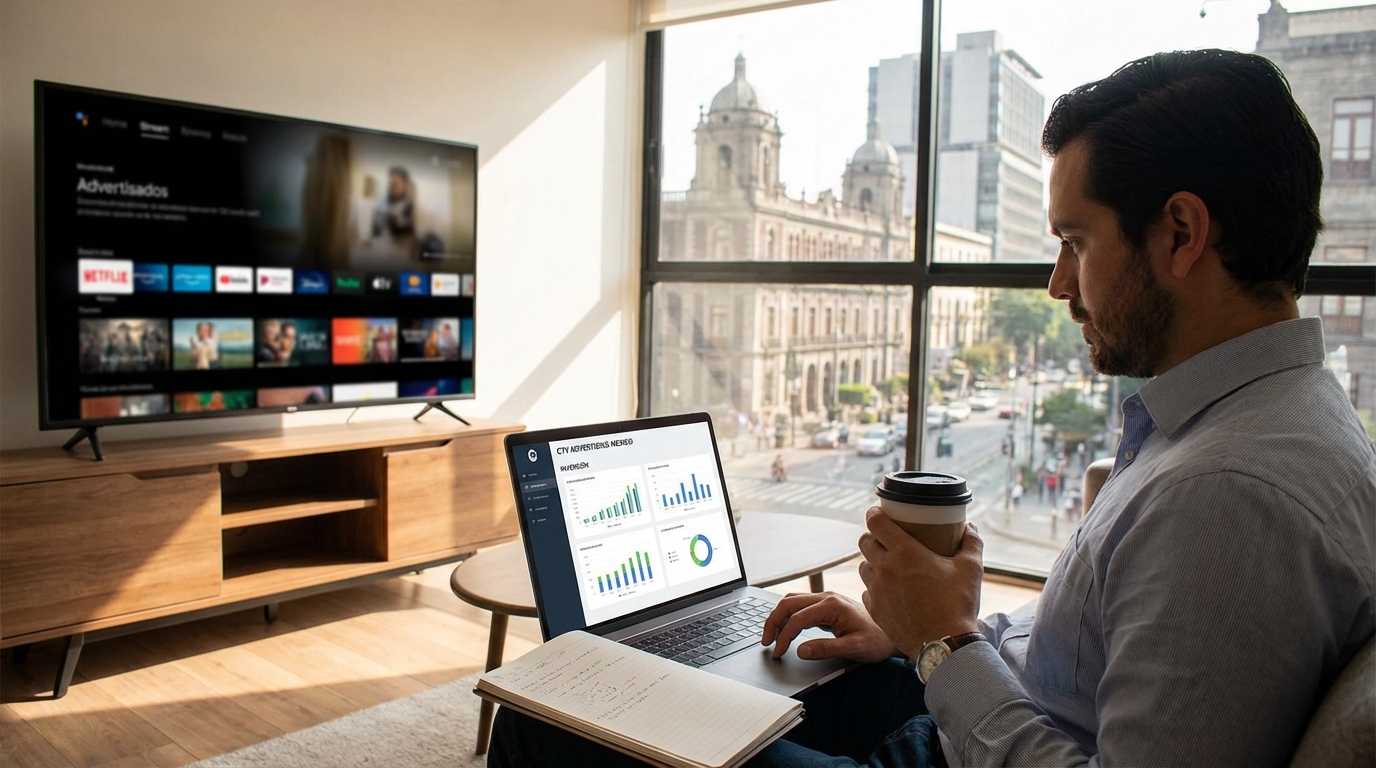
The year 2026 marks a turning point for those of us working in digital advertising. It is no longer enough to review weekly reports or wait days to know if a campaign is working. Live metrics have become the secret to success for agencies and advertisers who want real results, not empty promises. Think about this: while you read these lines, campaigns are automatically adjusting, budgets are being redistributed to the most profitable channels, and creatives are changing based on audience reactions in real time. This is no longer science fiction.
For mid-sized digital agencies , this shift represents a unique opportunity. For the first time, they can compete with industry giants using the same instant analytics tools that were previously only available to those with million-dollar budgets. The difference between a mediocre campaign and an extraordinary one no longer lies in how much money you invest, but in how quickly you can interpret and act on the data you receive. And here is the key: platforms that offer real-time monitoring are democratizing access to this advertising intelligence.
The new paradigm of real-time data analysis
The way we measure advertising success has changed radically. Just five years ago, we waited for monthly reports to make decisions. Today, that wait is equivalent to throwing money away. Real-time data analysis is not a luxury; it is competitive survival.
Evolution of advertising measurement toward 2026
I remember when basic metrics like impressions and clicks were enough to justify a campaign. Those days are behind us. Advertising measurement in 2026 integrates signals from multiple sources: connected TV, mobile devices, social media, and physical points of sale. Everything connected, everything synchronized.
Agencies that master this ecosystem work with unified dashboards that show the entire consumer journey. You no longer see isolated fragments of information, but a complete picture of how your audience interacts with every touchpoint. This allows you to identify patterns that previously went unnoticed, such as the exact time of day your target audience is most receptive to certain messages.
The most significant change is in data granularity. We used to measure audiences by the millions; now we can segment down to specific groups with unique behaviors. A CTV campaign can show different creatives based on each household's viewing history, and all of this is measured instantly.
The impact of zero latency on decision-making
Zero latency has completely changed the game. When you receive campaign performance data in milliseconds, you can make decisions that were previously impossible. An ad that isn't generating engagement within the first 30 minutes can be automatically paused before wasting valuable budget.
I have seen agencies reduce their cost per acquisition by up to 40% simply by reacting faster than their competition. It’s not about having a bigger budget, but about using it more intelligently. When you detect that a specific segment is responding better than expected, you can immediately redirect resources toward that audience.
Zero latency also eliminates the frustration of discovering problems too late. If a creative has an error or a message isn't resonating with the audience, you know in minutes, not weeks. This capacity for instant correction is what separates successful agencies from those that are just getting by.
Key metrics for dynamic campaigns in 2026
Not all metrics are created equal. Some tell you what has already happened, while others help you predict what’s coming next. The most effective agencies know exactly which ones to monitor and which to ignore so they don't drown in irrelevant data.
Instant attribution and predictive models
Attribution has always been the headache of digital advertising. How do you know which touchpoint actually drove the conversion? The attribution models of 2026 solve this problem with real-time probabilistic analysis. You no longer rely on cookies or identifiers that users can block.
Current predictive models can anticipate purchasing behavior up to 72 hours in advance. This means you can increase your ad spend just before your audience is ready to buy, not after. Imagine knowing that users who saw your CTV ad are 35% more likely to visit your website in the next 48 hours.
Combining instant attribution with prediction allows for something revolutionary: proactive rather than reactive optimization. You don't wait for results to come in to make adjustments; you anticipate what will work and act before your competition does.
Biometric engagement and live sentiment analysis
Engagement is no longer measured just by clicks and dwell time. Biometric metrics are entering the game, especially in connected TV advertising. Sensors in smart remotes and wearable devices can detect if the viewer actually paid attention to your ad or if they were distracted by their phone.
Live sentiment analysis processes social media reactions while your campaign is live. If your ad generates positive conversation, the system can automatically amplify its reach. If it detects negative reactions, it can adjust the frequency or pause distribution before any brand damage occurs.
These emotional metrics complement hard conversion data. A campaign might generate immediate sales but damage long-term brand perception. Real-time sentiment monitoring allows you to balance both objectives without sacrificing either.
Emerging technologies driving live monitoring
Behind every real-time metrics dashboard is sophisticated technology working at impressive speeds. Understanding these technologies helps you better choose the platforms you work with and make the most of their capabilities.
Integrating Generative AI into dashboards
Generative AI has transformed metrics dashboards from simple data visualizers into intelligent assistants that interpret and recommend. You no longer need a dedicated analyst to decipher what the numbers mean; the system explains it to you in natural language and suggests specific actions.
These dashboards can automatically generate custom reports, tailored to the level of detail each stakeholder needs. The CEO receives an executive summary with the most important metrics, while the media team gets granular analysis by channel and segment. Everything is generated in seconds, not hours of manual work.
AI also detects anomalies that a human might overlook. An unusual spike in cost-per-click, a sudden drop in conversion rate, or a change in the behavior of a specific segment triggers automatic alerts with explanations and recommended actions.
Edge Computing for local data processing
Edge computing solves one of the biggest challenges in real-time analysis: speed. Instead of sending all data to central servers for processing, calculations happen directly on the devices closest to the user. This reduces latency from seconds to milliseconds.
For CTV campaigns, this means the decision of which ad to show can be made the exact moment a viewer changes the channel or starts a program. There is no wait time while data travels to a remote server and back. Personalization happens instantly.
Agencies working with platforms that use edge computing report significant improvements in the accuracy of their metrics. Data is not lost or delayed during traffic spikes because processing is geographically distributed.
Automated optimization based on live signals
Intelligent automation is the logical next step after having real-time metrics. It is useless to receive instant information if you cannot act on it with the same speed. Automated optimization systems close this loop.
Dynamic bid and budget adjustment
Automated bidding systems in 2026 go far beyond simply adjusting cost-per-click. They consider dozens of variables simultaneously: time of day, device, geographic location, user history, active competition at that moment, and probability of conversion. Everything is calculated in milliseconds.
I have worked with agencies that managed to reduce their cost-per-acquisition by more than 50% simply by letting well-configured algorithms handle their bids. The key is to correctly define objectives and limits; then, the system does the heavy lifting 24/7.
Automatic budget redistribution between channels is equally powerful. If your CTV campaign is generating better results than your social media ads, the system can automatically move resources to maximize total return. Platforms like Masha allow you to see these metrics in real time and adjust budgets without complications, making this optimization accessible even for businesses with modest investments.
Creative personalization through data streams
Dynamic creative personalization takes automation to the next level. The same ad can show different products, messages, or calls to action depending on the viewer's profile. Everything is determined in real time by the data the system has on that specific audience.
For connected TV campaigns, this means two households watching the same program can receive completely different versions of your ad. One might see a price-focused message because the system detected cost sensitivity, while another receives an exclusivity message because their profile indicates a preference for premium products.
The effectiveness of these dynamic creatives is measured instantly. The system learns which combinations work best for each segment and continuously optimizes distribution. There is no need to wait weeks to conduct traditional A/B tests.
Privacy and ethics in immediate data tracking
With great power comes great responsibility. Access to real-time metrics raises important questions about privacy and the ethical use of data. Agencies that ignore these considerations expose themselves to significant legal and reputational risks.
Privacy regulations in Mexico and Latin America are evolving rapidly. The legal framework requires transparency regarding what data is collected and how it is used. Serious advertising platforms implement clear consent mechanisms and allow users to control their information.
The good news is that aggregated and anonymized metrics remain extremely valuable without compromising individual privacy. You do not need to know the name of every viewer to understand that a certain demographic segment responds better to a certain type of message. Modern systems are designed to extract useful insights while protecting people's identities.
Ethical agencies go beyond minimum legal compliance. They establish internal policies on what data they will use and what they will reject, even if they could technically access it. This stance not only protects consumers but also builds trust with clients who are increasingly aware of how their information is used.
Transparency with your own clients regarding the metrics you monitor is also fundamental. Clearly explaining what you measure, why you measure it, and how you use that information to optimize their campaigns builds long-term relationships based on mutual trust.
Strategies to master the advertising ecosystem of the future
Knowledge without action is useless. Here are concrete recommendations for agencies looking to make the most of live metrics in 2026 and beyond.
First, invest in continuous training for your team. Real-time analytics tools are only as effective as the people operating them. A sophisticated dashboard in the hands of someone who doesn't understand what the data means is a waste of resources.
Second, establish clear response processes for different scenarios. When metrics show a problem, who has the authority to pause a campaign? What is the minimum acceptable performance threshold? These decisions must be made before a crisis occurs, not during one.
Third, diversify your advertising channels to get a more complete view of your audience's behavior. Combining CTV with traditional digital channels generates richer data and allows for cross-channel optimizations that would be impossible in isolated silos.
Fourth, choose platforms that offer real transparency in their metrics. Be wary of systems that only show positive numbers or do not allow for independent verification of their data. The best platforms give you full access to information without filters or manipulation.
The future of digital advertising belongs to those who can interpret and act on data in real time. Agencies that master these skills will have a competitive advantage that is hard to match. If you are looking for a platform that allows you to access streaming TV advertising with real-time metrics, without long-term contracts and starting at $0.01 per view, meet Masha and discover how to democratize access to CTV for your clients.