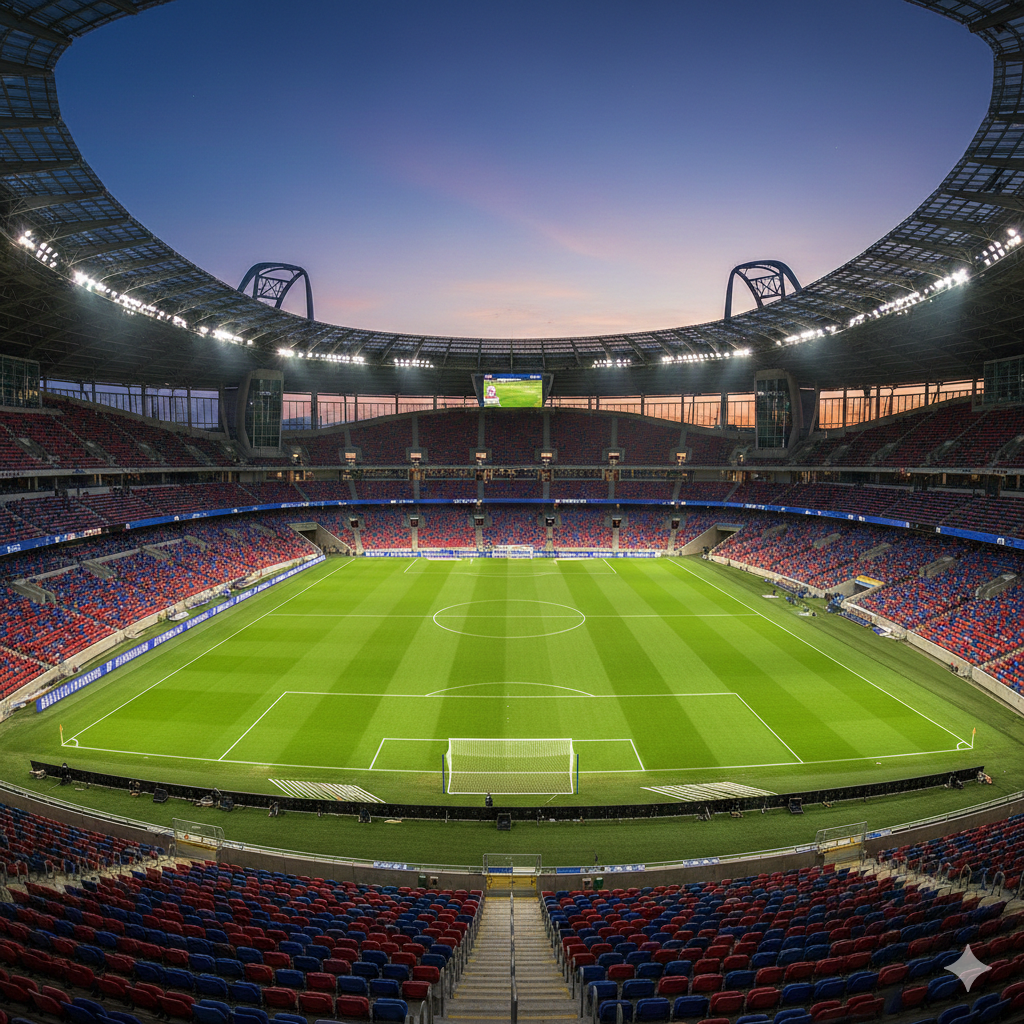
Masha and the advertising revolution at the 2026 World Cup
Next summer, millions of people across three countries will have their eyes fixed on a single event: the 2026 FIFA World Cup. For brands and digital agencies, this represents a once-in-a-lifetime opportunity. Masha will be selling digital CTV advertising inventory during this historic tournament, allowing businesses of all sizes to compete for the attention of massive audiences without the need for million-dollar budgets.
Connected TV advertising is no longer an exclusive luxury for large corporations. According to recent projections, CTV investment in the United States will reach approximately $38 billion in 2026, a 14% increase over the $33.35 billion in 2025, based on data from adwave.com. This growth reflects a fundamental shift in how audiences consume sports content and entertainment in general.
What makes this World Cup different is its unprecedented scale: 48 teams, 104 matches, and host cities spread across the United States, Mexico, and Canada. For advertisers, this means more exposure opportunities, more diverse audiences, and the ability to connect with consumers during moments of high emotion. The question is no longer whether you should be present on CTV during the tournament, but how to maximize every dollar invested in your advertising strategy.
Strategic partnership for the biggest sporting event of the year
The 2026 World Cup will break all television viewership records. The combination of three host countries, the expanded format, and the region's passion for soccer guarantees viewership figures that no other event can match. Marketing and sponsorship deals for the 2026 World Cup are projected to generate between $2.5 and $3 billion, as reported by sponsorshipassociation.com.
For mid-sized digital agencies, participating in this advertising ecosystem used to seem impossible. Entry costs were prohibitive, negotiations were lengthy, and investment minimums left most out. Now, self-service platforms provide access to premium streaming TV inventory without intermediaries or extensive contracts.
The key is understanding that advertising success during the World Cup does not depend exclusively on buying spots during specific matches. As an analysis from digiday.compoints out: "Success will not be defined by whether a brand bought a specific match, but by who it reached, how often, and what happened next. The competitive advantage is agility, not access."
This perspective completely changes the strategy for agencies managing SMB accounts. You don't need a Coca-Cola-sized budget to generate real results. You need reaction speed, smart segmentation and the ability to optimize in real time.
Key dates and venues: June 11 to July 19
The tournament will run from June 11 to July 19, 2026, with matches spread across 16 cities in the three host countries. Mexico will host matches at Estadio Azteca in Mexico City, Estadio Akron in Guadalajara, and Estadio BBVA in Monterrey. The United States will have the most venues, including cities like Los Angeles, New York, Miami, Dallas, and Houston. Canada will participate with Toronto and Vancouver.
This geographic distribution creates unique segmentation opportunities. A Mexican brand can focus its investment on local audiences during matches played in domestic venues, while a company with a regional presence can diversify its reach based on the tournament schedule.
Broadcast times also play a crucial role. With matches scheduled across different time zones, audiences will fragment in predictable ways. This allows advertisers to plan campaigns that align with the moments when their target audience is most engaged.
The 48-team format means more group-stage matches, extending advertising opportunities during the first few weeks of the tournament. The knockout rounds, with their heightened emotional intensity, represent premium moments where engagement reaches its peak.
CTV opportunities for brands during the World Cup
Connected TV has transformed how audiences consume live sports events. The average adult in the United States spent more than two hours a day on CTV in 2024, and this consumption is expected to grow by 25% by 2026, according to data from paramount.com. During high-profile sporting events, these figures skyrocket significantly.
What is interesting for advertisers is that the CTV audience tends to be younger, more educated, and have higher purchasing power than traditional television viewers. These are consumers who actively make purchasing decisions and respond better to personalized messages than to generic advertising.
The 2026 World Cup will be broadcast across multiple streaming platforms, fragmenting the audience but also creating new reach opportunities. This fragmentation, far from being a problem, allows brands to be more precise in their targeting and avoid wasting impressions on irrelevant audiences.
For agencies managing multiple clients, this means being able to offer differentiated strategies based on each brand's profile. A local restaurant in Guadalajara has very different needs than an e-commerce store with national shipping, and both can find their place in the World Cup advertising ecosystem.
Advantages of digital inventory on connected TV
CTV advertising combines the best of both worlds: the visual and emotional impact of traditional television with the precision and measurement of digital marketing. During an event like the World Cup, this combination is especially powerful.
CTV ads during live sports generate superior results compared to other formats. In fact, CTV ads for the NFL during the 2024-2025 season performed 66% better than ads on cable or broadcast television, according to adtelligent.comThe sports context creates an emotional state in the viewer that amplifies receptivity to advertising messages.
Unlike linear television, CTV inventory allows for:
Geographic targeting at the city or state level
Targeting based on interests and consumer behavior
Controlled frequency to avoid message saturation
Real-time measurement of impressions, video completion, and engagement
Continuous optimization based on results
For agencies working with limited budgets, the ability to measure and adjust in real time represents a huge competitive advantage. You don't have to wait weeks to know if your campaign is working; you can see the results and make changes the same day.
Audience segmentation in the United States, Mexico, and Canada
The tri-national nature of the 2026 World Cup creates a mosaic of audiences with distinct characteristics. In Mexico, soccer is practically a religion; the Mexican National Team generates levels of attention that no other event can match. In the United States, soccer has grown exponentially among Hispanic audiences and young English speakers. In Canada, interest in soccer has increased significantly following their national team's qualification for Qatar 2022.
This diversity allows for sophisticated segmentation strategies. A brand can create specific messages for each market, adjusting not only the language but also the tone, cultural references, and promotional offers.
CTV platforms allow for segmentation by:
Basic demographics: age, gender, socioeconomic level
Geography: country, state, city, zip code
Interests: sports, technology, travel, gastronomy
Purchase behavior: product categories, purchase frequency
Devices: smart TVs, gaming consoles, streaming devices
For a digital agency managing clients across different industries, this granularity allows for the creation of campaigns that truly connect with specific audiences. A real estate client in Monterrey can target adults aged 30 to 50 exclusively in that city, while a sportswear brand can expand its reach to the entire region.
Real-time advertising strategies
Advertising during live sporting events requires a different mindset than traditional campaigns. The context changes minute by minute: a goal, a red card, or a penalty can transform the emotional state of millions of viewers simultaneously.
The smartest brands leverage these moments to connect with audiences in heightened emotional states. An ad that appears right after a goal by Mexico has a very different impact than the same ad during a lackluster match.
The key is preparation. Before the tournament, define possible scenarios and have creative assets ready for every situation. What message do you want to convey if your team wins? What if they lose? How can you capitalize on viral moments without appearing opportunistic?
Self-service platforms allow for real-time adjustments to budgets and bids, making it easy to increase investment during high-interest matches and reduce it during games that are less relevant to your target audience.
Interactive and high-impact ad formats
CTV ads have evolved beyond the traditional 30-second spot. Interactive formats allow viewers to engage directly with advertising content using their remote control or mobile device.
Interactive CTV ads achieve engagement rates between 1.8% and 3.5%, according to demandlocal.com. Compared to the average display advertising CTR (around 0.1%), these numbers represent a significantly higher level of interaction.
The most effective formats for sporting events include:
QR code ads that lead to special offers
Interactive overlays that allow users to explore products without interrupting the broadcast
15-second spots with a clear and urgent call-to-action
Retargeting sequences that reinforce the message throughout the tournament
Creativity must also adapt to the context. An overly serious ad during an exciting match can feel out of place. Consider the tone of the moment and adjust your message to resonate with the audience's emotional state.
Campaign optimization based on tournament performance
One of the greatest advantages of digital advertising on CTV is the ability to optimize continuously. Unlike buying a fixed package of spots on traditional television, the programmatic platforms allow you to adjust strategies based on real-time data.
During the World Cup, this means being able to react to audience patterns as the tournament progresses. You might discover that your audience responds better during night matches, or that certain creatives generate higher engagement during the knockout stages.
Key metrics to monitor include:
Video completion rate: the percentage of viewers who watch the entire ad
Reach and frequency: how many unique people you reach and how often
Brand lift: changes in brand awareness and consideration
Direct conversions: measurable actions such as site visits or purchases
Effective optimization requires setting clear benchmarks before the tournament. Define which metrics matter most for each client and establish realistic goals based on historical data from similar campaigns.
The impact of the 2026 World Cup on the digital ecosystem
The 2026 World Cup will not only transform sports advertising; it will redefine expectations for how brands interact with audiences during massive events. The combination of scale, technology, and media fragmentation creates a unique laboratory for experimenting with new strategies.
For digital agencies, this event represents an opportunity to demonstrate value to their clients. Those that master programmatic buying in CTV, real-time optimization, and results measurement will have a lasting competitive advantage.
The advertising ecosystem is changing rapidly. Budgets continue to migrate from traditional television to streaming, and events like the World Cup accelerate this transition. Agencies that do not develop CTV capabilities will fall behind more agile competitors.
Video consumption trends on streaming platforms
Video consumption behavior has fundamentally changed in recent years. Younger audiences have practically abandoned linear television, preferring streaming platforms that allow them to watch content on their own terms.
During live sporting events, however, consumption becomes synchronous. Millions of people watch the same content simultaneously, creating moments of shared attention that are increasingly rare in today's fragmented media landscape.
This combination of streaming habits with synchronous consumption creates unique opportunities. Viewers are accustomed to less intrusive advertising experiences in streaming, which means well-executed ads can stand out positively.
Streaming platforms also offer richer audience data than traditional television. You can know not only how many people saw your ad, but what they did afterward: visited your site, searched for your brand, or completed a purchase.
How to access Masha's exclusive inventory
Joining the advertising conversation for the 2026 World Cup no longer requires million-dollar budgets or months of negotiation. Self-service platforms have democratized access to premium streaming TV inventory, allowing businesses of all sizes to compete for the attention of massive audiences.
The process is simpler than you might think. Signing up takes minutes, not weeks. You can set up campaigns by specifying exactly where you want to appear, who you want to reach, and how much you are willing to invest. Real-time metrics allow you to see results immediately and adjust your strategy on the fly.
Agility will be the competitive advantage during the World Cup. Brands that can react quickly to tournament moments, optimize based on real data, and scale investment when they find what works will be the ones that achieve the best results.
You don't need to be an expert in programmatic advertising to get started. Self-service interfaces are designed to be intuitive, and you can launch your first CTV campaign with accessible investments starting at $2,000 MXN, with no long-term contracts or prohibitive minimums.
If your agency manages clients who could benefit from exposure during the biggest sporting event of the year, now is the time to explore your options. Masha offers exactly this type of access: streaming TV advertising from $0.01 per view, with registration in under 5 minutes and real-time metrics. Learn more here and start planning your strategy for the 2026 World Cup.