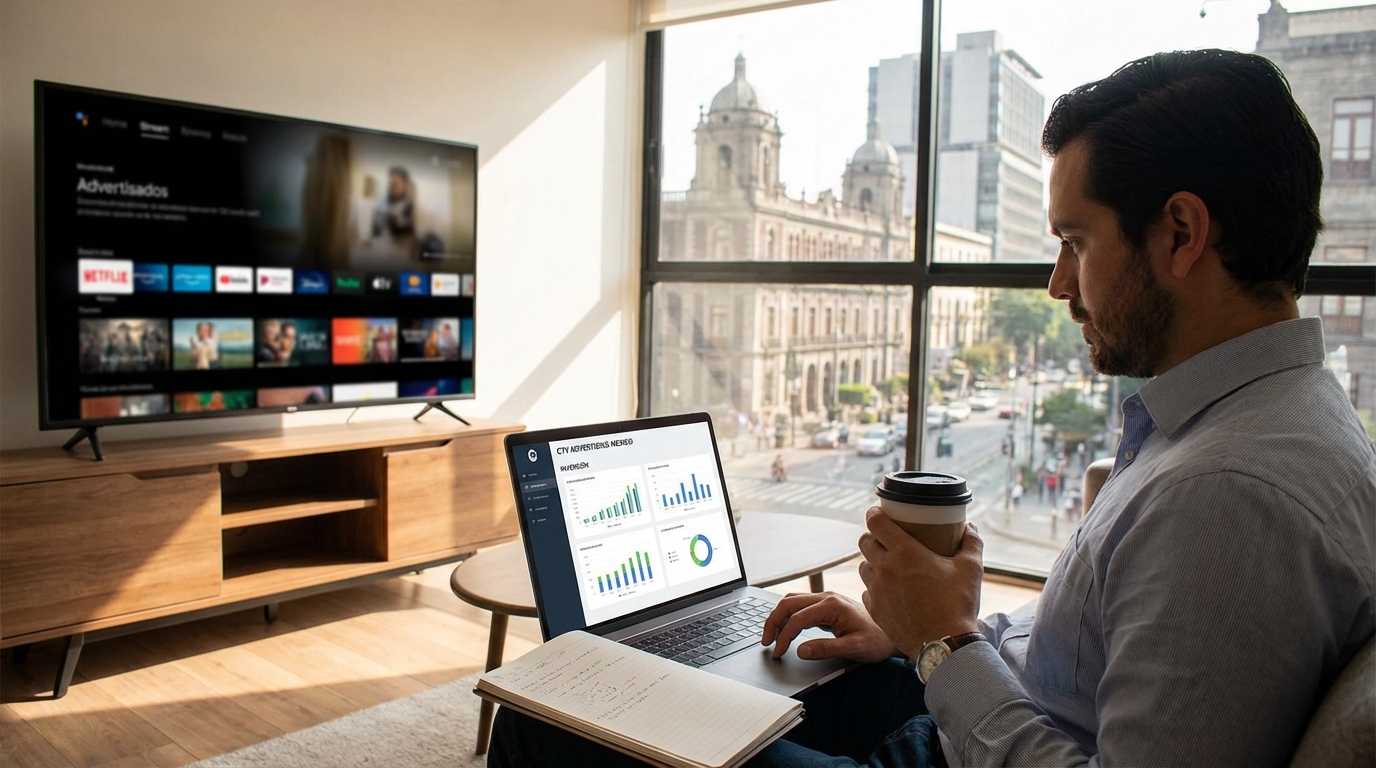
The evolution and relevance of TV advertising in the digital age
TV advertising didn't die with the arrival of the internet. In fact, global spending on TV ads is approaching $340 billion annually, according to International Advertising Solutions. What has changed is how brands connect with their audiences. Mid-sized digital agencies face an interesting challenge: their clients want the massive reach of TV, but with the precision of digital marketing. The good news is that both worlds now coexist, and the barriers to entry are lower than ever.
Synergy between traditional television and streaming platforms
Streaming didn't replace traditional TV; it complemented it. According to New Digital Age, spending on CTV advertising will grow from approximately $33 billion in 2025 to nearly $52 billion by 2029. Mexican families switch between broadcast channels and platforms like Pluto TV or Roku throughout the same evening. For agencies, this means designing strategies that leverage both channels without duplicating efforts or budgets.
The emotional impact and massive reach of the TV format
No 300x250 banner generates the same emotional response as a well-produced commercial on a big screen. Television remains the medium where brands build recognition and trust at scale. Digital video will capture nearly 70% of TV and video ad spending in the United States in 2025, reports Live Ramp. This data confirms that the audiovisual format dominates; only the screen on which it is consumed has changed.
Audience segmentation and time slot selection
Identifying psychographic and demographic targets
Forget about segmenting only by age and gender. The most effective advertisers combine demographic data with content consumption behaviors. Does your client sell car insurance? Look for audiences that watch road trip shows or automotive content. Promoting financial services? Target those who consume economic news via streaming. The interest and viewing habit segmentation offered by platforms like Masha allows you to reach exactly who matters, without wasting impressions.
Budget optimization through dayparting
Not all time slots cost the same or perform the same. Dayparting consists of choosing specific windows where your audience is most receptive. A fast-food restaurant performs better between 11 AM and 2 PM. A mattress brand connects better after 10 PM. With self-service platforms, you can adjust schedules in real time based on performance, something unthinkable in traditional TV buying where contracts are signed months in advance.
Innovative ad formats and visual creativity
Storytelling: The art of connecting in 30 seconds
You have half a minute to capture attention, spark emotion, and leave a mark. Successful commercials tell stories with conflict and resolution, not lists of features. Think of a taco shop owner who can finally advertise on TV thanks to affordable budgets: that is a story that resonates. The 15-second format works for brand recall, but 30 seconds allow for developing narratives that stick in the memory.
Product placement and integrated program mentions
Beyond the traditional spot, mentions within content generate a different kind of credibility. When a show host mentions a product naturally, the audience perceives it as a recommendation, not an ad. This format requires greater investment and coordination, but recall rates significantly outperform conventional commercials.
Integration of transmedia and second-screen strategies
Using QR codes and hashtags to encourage interaction
78% of viewers use their phones while watching television. On-screen QR codes turn passive viewers into active visitors to your website. Hashtags generate social media conversations that extend the organic reach of your campaign. The key is to offer something of immediate value: a discount, exclusive content, or the chance to participate in something.
Synchronized social media and TV campaigns
Launching the same message on TV and social media simultaneously multiplies the impact. When someone sees your streaming commercial and then finds the same content on Instagram, recall skyrockets. According to Creative Pool, advertising formats will become increasingly interactive, shoppable, and personalized. Agencies that master this synchronization will have a clear competitive advantage.
ROI measurement and key performance metrics
Analysis of GRPs, reach, and frequency
Gross Rating Points remain the common currency for comparing television campaigns. Reach indicates how many unique people saw your ad, while frequency measures how many times they saw it. The general rule suggests that a person needs to see a message between 3 and 7 times before taking action. Platforms like Masha offer real-time metrics that allow you to adjust frequency on the fly.
Post-broadcast sales and web traffic attribution
Measuring the direct impact of TV on sales has always been complicated. Today, you can track spikes in web traffic immediately after your commercial airs. Compare visits during the 5 minutes following each broadcast against your baseline. Exclusive TV promo codes also help attribute specific conversions to the channel.
The future of TV advertising: Programmatic buying and personalization
Global advertising spend reached $933 billion in 2024, with $274 billion allocated to traditional media including TV, according to Broadley TV. Programmatic TV ad buying is growing by 23% according to AI Digital. This means that soon you will be able to buy TV ads with the same ease as you buy Google Ads.
If your agency wants to offer streaming TV advertising to your clients without the hassle, Masha allows you to launch campaigns starting at $2,000 MXN, with no long-term contracts or minimum investment requirements. Registration takes less than 5 minutes and you can view metrics in real time. Get to know Masha and start democratizing TV for your clients.