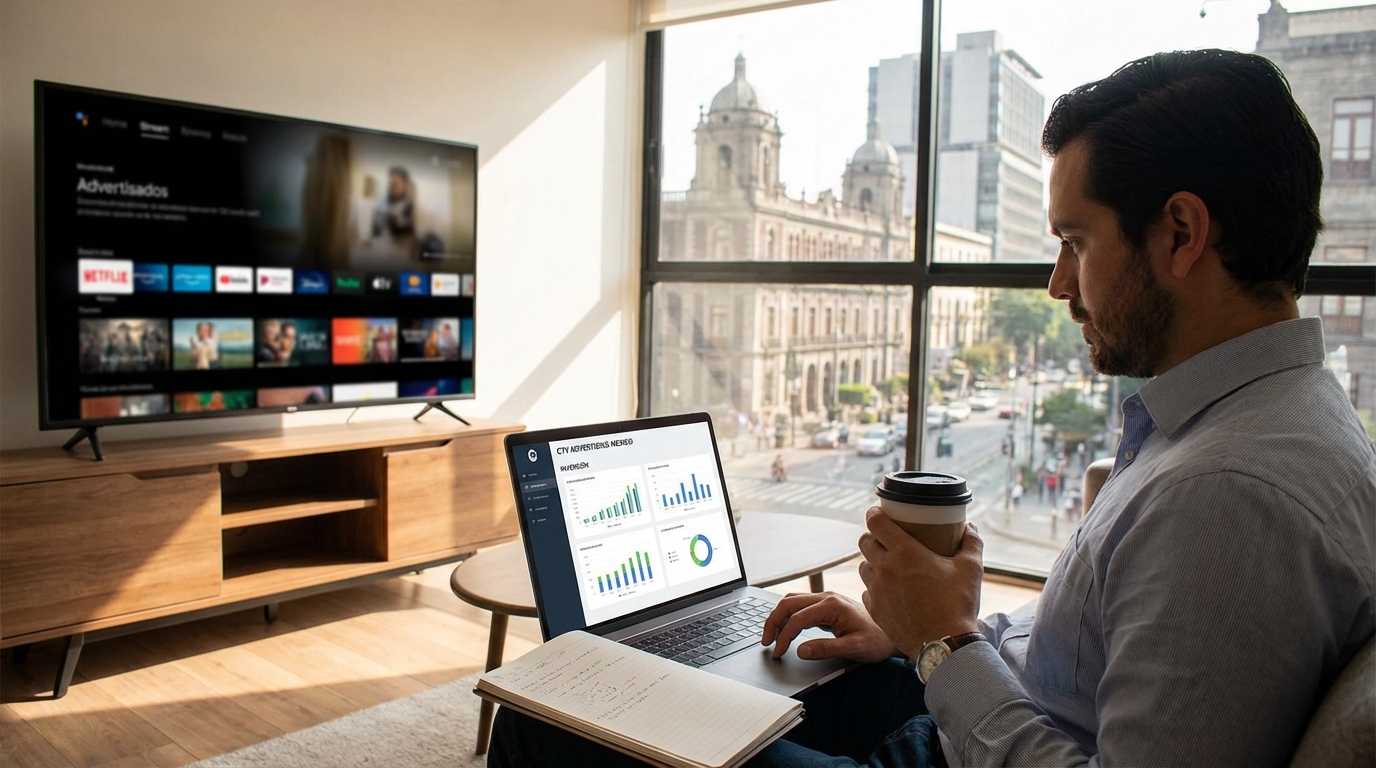
The current landscape of Streaming TV advertising
The question of how much it costs to advertise on Streaming TV is no longer exclusive to large corporations with million-dollar budgets. The market has changed radically over the last two years, and today, mid-sized digital agencies have access to premium inventory that previously seemed out of reach.
The numbers speak for themselves: streaming advertising spend in the United States grew by 17% in 2024, reaching $12.9 billion according to Marketing Dive. This growth reflects a massive migration of budgets from linear television to connected platforms. Mexico is following this trend with an 18 to 24-month lag, which represents a window of opportunity for those who enter now.
The streaming ecosystem has fragmented in a way that favors advertisers. You no longer depend on negotiating directly with a single cable provider or television network. Platforms like Pluto TV, Roku, Netflix with ads, and Disney+ are competing for your investment, which naturally puts downward pressure on prices. In fact, Digiday reports that Amazon's entry into the streaming advertising market has driven a general reduction in costs among competitors.
For agencies managing clients in retail, restaurants, professional services, or e-commerce, this means being able to offer connected TV campaigns without the need for six-figure budgets. The barrier to entry has dropped drastically, although understanding the pricing structure remains essential to optimizing every dollar invested.
Pricing models and key industry metrics
The streaming advertising market operates with specific metrics that differ significantly from traditional media buying. Mastering these concepts will allow you to negotiate better and evaluate proposals with informed judgment.
Understanding CPM (Cost per mille)
CPM remains the dominant metric in the streaming industry. It represents what you pay for every thousand times your ad is shown to unique users. According to Lakestone Digital, Streaming TV CPMs can range from $10 to $60, depending on factors such as targeting and platform.
The interesting trend is that the average CPM for streaming services fell 21% year-over-year in 2024, settling at approximately $25.68 according to Mountain Research. This reduction directly benefits agencies with moderate budgets, who can now access inventory that cost significantly more two years ago.
In the Mexican market, CPMs tend to be lower than in markets like the United States. Platforms like Masha offer pricing starting at $0.01 MXN per view, which democratizes access for businesses of all sizes.
Differences between programmatic and direct buying
Direct buying involves negotiating directly with platforms or sales representatives. It offers greater control over specific placements but requires high minimum commitments and long negotiation times. Typically, minimum investment requirements for direct buying exceed $50,000 per campaign.
Programmatic buying automates the process through self-service platforms. You reduce intermediaries, access multiple inventory sources simultaneously, and can launch campaigns in days rather than weeks. The historical downside was less control over where ads appeared, though modern platforms have significantly closed this gap.
For mid-sized agencies, programmatic buying through self-service platforms is the most practical option. You eliminate the need for extensive negotiations and can adjust budgets in real-time based on the performance of each campaign.
Factors that determine ad costs
The final price of your streaming campaign depends on multiple variables that interact with one another. Understanding these factors allows you to optimize your investment and avoid unpleasant surprises.
Audience targeting and demographic data
The more specific your targeting, the higher the CPM. Targeting adults aged 25 to 54 in general costs less than targeting women aged 30 to 40 with interests in fitness and high purchasing power. This logic applies universally across all platforms.
Geographic targeting also impacts costs. Advertising in Mexico City, Monterrey, or Guadalajara typically costs more than in secondary markets due to higher demand for inventory. However, the geographic precision of streaming far exceeds that of traditional television: you can reach specific neighborhoods instead of entire metropolitan areas.
Viewing behavior data adds another layer of targeting. Some platforms allow you to target users who watch cooking, sports, news, or specific entertainment content. This capability justifies higher CPMs because you reduce wasted impressions on irrelevant audiences.
Seasonality and market demand
The fourth quarter of the year drives up prices across all platforms. El Buen Fin, the holiday season, and fiscal year-end concentrate budgets from large advertisers competing for the same inventory. Expect to pay between 20% and 40% more during November and December compared to February or March.
Sporting events also generate spikes in demand. Liga MX matches, NFL events, or international competitions temporarily increase CPMs on platforms that broadcast this content. Campaign planning avoiding these spikes can significantly stretch your budget.
Time of day matters less in streaming than in linear television, but prime time remains more expensive. Self-service platforms allow you to schedule ads at specific times to balance reach and cost according to your goals.
Estimated costs by platform and format
Prices vary substantially between platforms. Knowing these ranges helps you build a realistic and diversified media plan.
Advertising on leading platforms (Netflix, Disney+, YouTube)
Netflix launched its ad-supported tier in 2022 and has aggressively adjusted prices since then. According to Mountain Research, Netflix's average CPM in 2024 was $37.02, a 32% reduction compared to 2023. Even so, it remains one of the most expensive in the market due to the perceived quality of its audience.
Disney+ operates in similar ranges, with CPMs between $30 and $45 depending on targeting. Its strength lies in family audiences and content from recognized franchises. Minimum investment requirements for direct buys typically exceed $25,000.
YouTube CTV represents an intermediate option. CPMs range between $15 and $35 with greater flexibility in minimum investment requirements. The advantage is its massive reach and the ability to use the same creative you already have for digital video campaigns.
FAST channels and niche services
FAST (Free Ad-Supported Streaming TV) channels offer the most accessible CPMs on the market. Pluto TV, Tubi, and the Roku Channel operate with CPMs between $8 and $20, significantly lower than premium platforms.
The key takeaway: 69% of CTV users prefer free, ad-supported services over paying for ad-free options, according to Mountain Research. This means FAST channels are not second-tier inventory: they represent where the audience actually is.
Niche services focused on sports, news, or Spanish-language content can offer competitive CPMs with audiences that are highly relevant to certain advertisers. The key is to evaluate whether the audience profile matches your target customer.
Minimum budget and expected return on investment
The practical question every agency needs to answer: how much do I need to invest to get measurable results?
Investment minimums vary dramatically. Direct buys with premium platforms can require $50,000 or more. Traditional programmatic platforms typically ask for between $5,000 and $10,000 per month. However, self-service platforms like Masha allow you to launch campaigns starting at $2,000 MXN, removing the barrier to entry for small and medium-sized businesses.
Return on investment in streaming TV is measured differently than in performance marketing. Don't expect direct conversion attribution like in Google Ads or Meta. The value lies in awareness, brand consideration, and search lift. Studies consistently show that CTV campaigns increase brand searches by 15% to 30% during and after the campaign.
To calculate a reasonable initial budget, consider reaching your target audience with a frequency of 3 to 5 impressions per user during the campaign period. If your target market is 100,000 households and the average CPM is $20, you need approximately $6,000 to $10,000 for a four-week campaign with adequate frequency.
How to optimize your Streaming TV investment
Maximizing the return on every dollar invested requires a deliberate strategy, not just turning on campaigns and hoping for results.
Diversify your inventory between premium platforms and FAST channels. A mix of 30% premium and 70% FAST typically offers the best balance between reach and cost for moderate budgets. Premium platforms provide brand credibility while FAST channels extend your reach efficiently.
Test different creatives from the start. The cost of video production is no longer a barrier: AI generation tools allow you to create variants quickly. Platforms like Masha integrate AI ad creation directly into their workflow, eliminating the need to coordinate with external production companies.
Monitor metrics in real time and adjust. The advantage of streaming over traditional television is the ability to optimize during the campaign. If a specific audience segment or platform performs better, reallocate budget immediately instead of waiting for the final report.
Consider your client's seasonality. Launching campaigns during off-peak seasons allows you to stretch your budget significantly. A restaurant can get better results by investing in January and February than by competing for inventory in December.
Streaming TV is no longer the exclusive territory of big brands. If you are looking for an accessible way to get your clients on the big screen without long contracts or prohibitive minimums, platforms like Masha allow you to launch campaigns in minutes with prices starting at $0.01 per view and real-time metrics to optimize every dollar invested.